The core sequence from 1 to 10
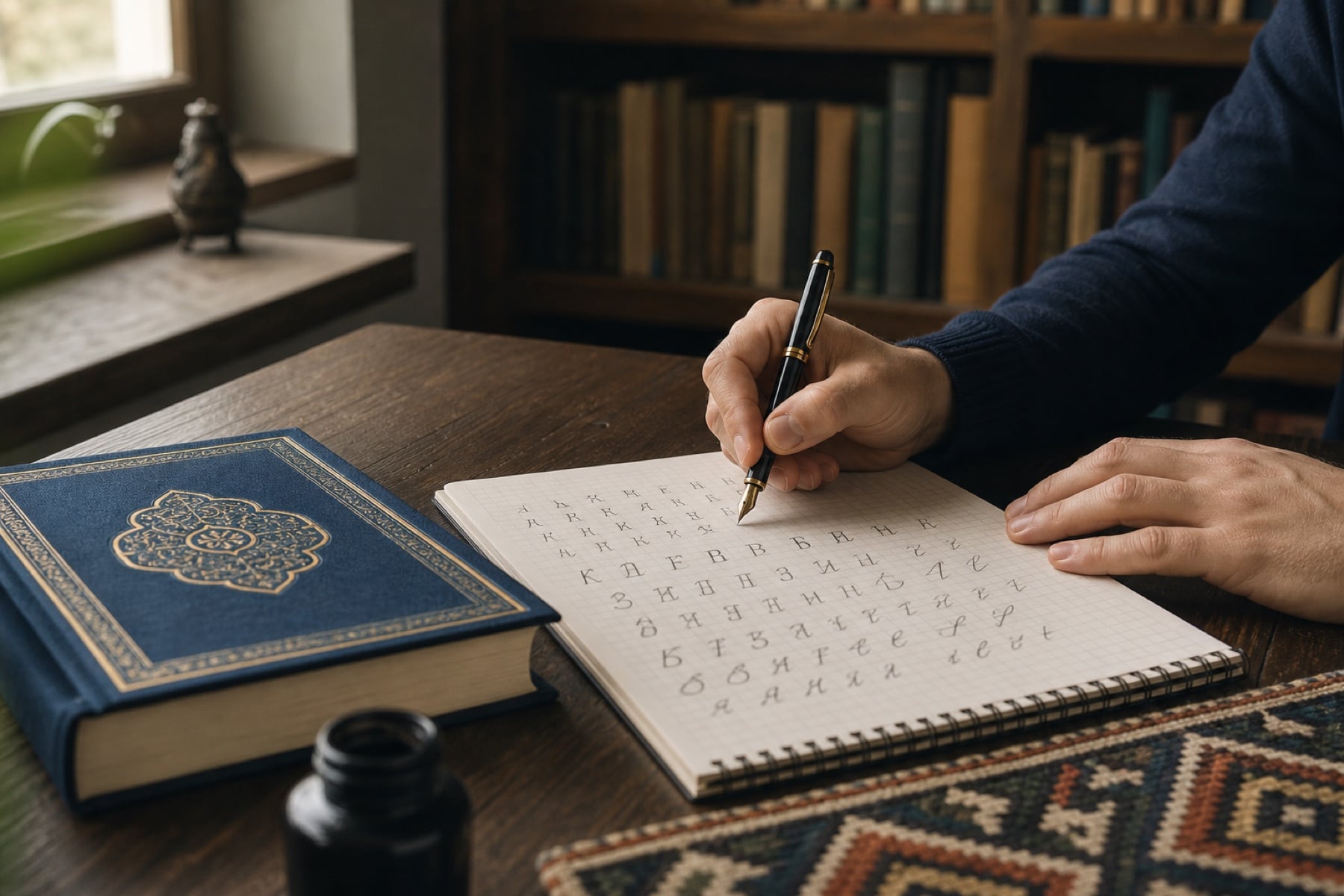
The first ten are best learned as separate words: цхьаъ, шиъ, кхоъ, диъ, пхиъ, ялх, ворхӀ, бархӀ, исс, итт. The character Ӏ is not the digit 1; it is the palochka used in Chechen Cyrillic. Older typing may substitute Latin I or the numeral 1, but contemporary spelling retains Ӏ.
How 11–19 are formed
From 11 to 18, the unit combines with the element for ten: цхьайтта, шийтта, кхойтта, дейтта, пхийтта, ялхитта, вуьрхӀитта and берхӀитта. Nineteen has the distinct form ткъайоьсна. Learning 11–20 as a complete sequence is therefore more reliable than guessing from 1–10.
Twenty-one, thirty and the tens
Twenty is ткъа; 21 is ткъе цхьаъ and 22 is ткъе шиъ. Thirty, ткъеитт, transparently combines twenty and ten. Forty is шовзткъа, sixty кхузткъа and eighty дезткъа; fifty, seventy and ninety add ten to the relevant score. This shows decimal and base-twenty layers working together.
Numbers alone and before nouns
Some low numerals have an independent form ending in ъ and a shorter form before a noun: цхьаъ/цхьа, шиъ/ши, кхоъ/кхо and пхиъ/пхи. This is grammatical, not a spelling error. After learning the cards, practise with real nouns such as ticket, day, book or person to see which form the sentence requires.
Hundreds, thousands and a study method
One hundred is бӀе and one thousand is эзар. Before larger numbers, automate 1–10, 11–20 and the multiples of twenty. Put the numeral on one side of a card and Cyrillic on the other, then practise in random order. Because spelling does not capture every Chechen sound, use a reliable native recording for stress and pronunciation.