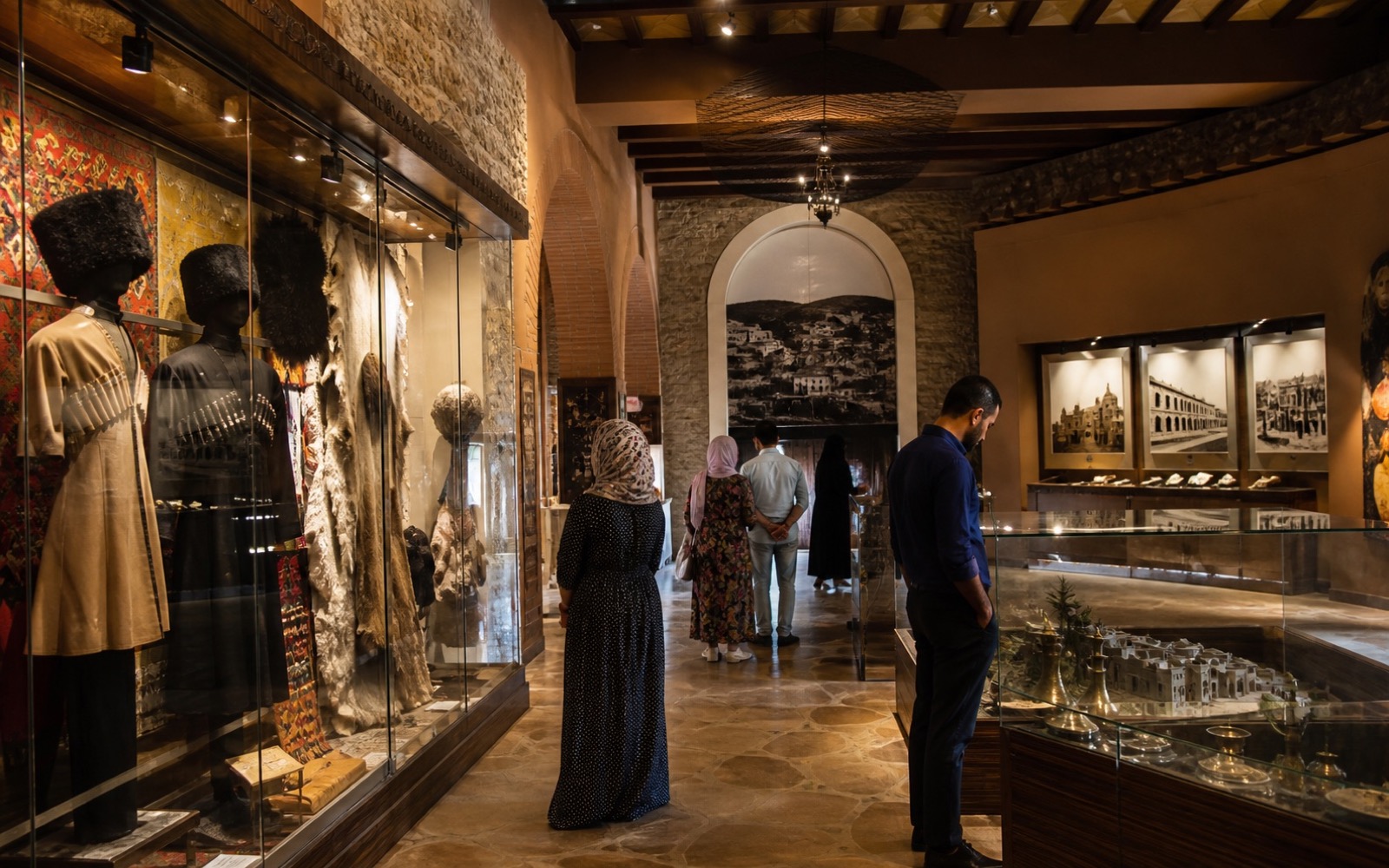
Look closely at the details
Lines, belts, metalwork, embroidery and headwear carry the story. In museums, read material, period and maker information; be cautious when souvenirs are marketed as historical objects.
Shared forms, local meanings
Similar silhouettes appear across the Caucasus. Similarity does not erase distinct identities; read the object record together with the community's own account.
Questions before buying
Ask who made the item, where and from which materials. If handmade, ask about the maker and process; do not buy objects presented as antiquities without documentation.
Read a dress photograph as evidence
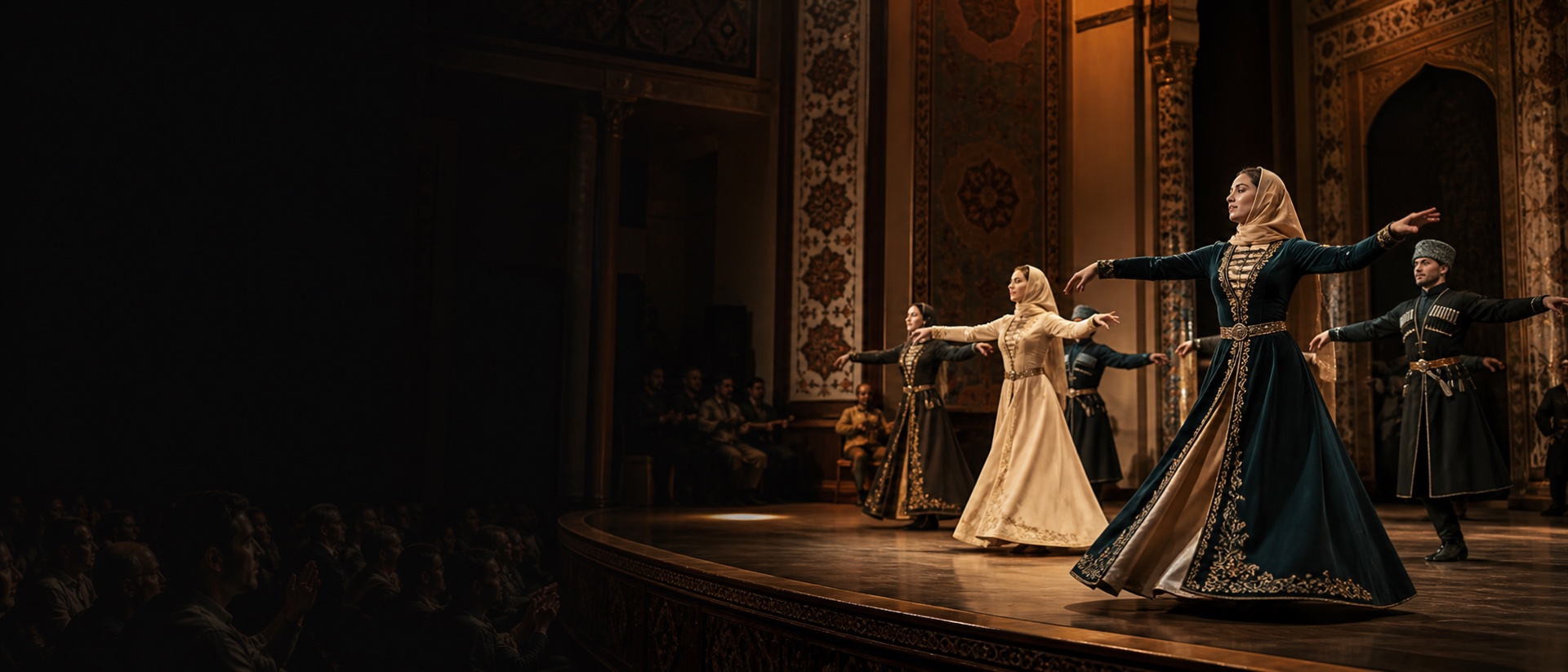
Do not identify traditional dress from appearance alone; first determine whether the image represents a museum object, stage costume, ceremonial use, family archive or souvenir. Read the accession number, where available, together with material, period, maker and the community named by the institution. A cherkeska, long silhouette, metalwork or similar headwear can appear among several Caucasian peoples; one detail cannot prove that a person or object is Chechen. Nor should the papakha be reduced to a decorative prop: preserve its historical association with dignity and men’s dress. Do not label a stage adaptation as everyday historical clothing or a newly made item as an antiquity. If the record is incomplete, state the uncertainty openly instead of assigning an identity the evidence cannot support.