Around a cup of tea
Chechen food is not only about substantial meat dishes. A bread served beside tea reveals another side of home cooking: hand-rolled dough, the balance of the filling and serving it warm. For a first encounter, compare two different filled breads at the same table. Asking which contains cheese and which contains pumpkin can lead to a more memorable conversation than trying to memorise names. A host's account of the family recipe adds something a menu description cannot provide.
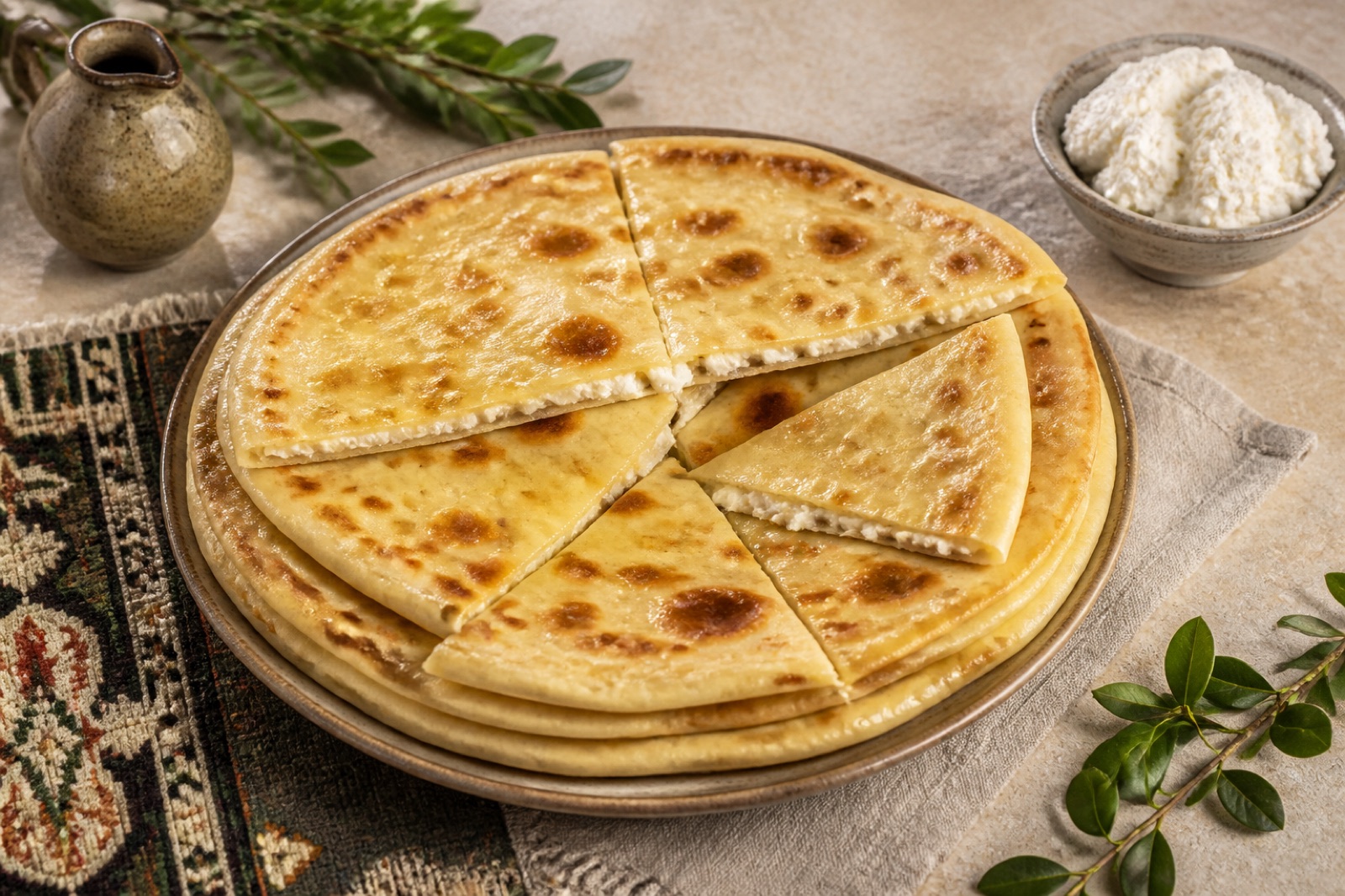
Chepalgash: thin bread with cheese
Chepalgash is a round filled bread associated with cheese. The republic's cultural heritage catalogue records it both as everyday food and as something offered to guests. Taste a small piece with dough and filling together: sampling only the centre misses the contribution of the thin bread. If you want to make it at home, concentrate first on rolling evenly. Thick edges and filling gathered in the middle make for uneven bites. The dedicated chepalgash recipe gives the ingredients and preparation sequence.
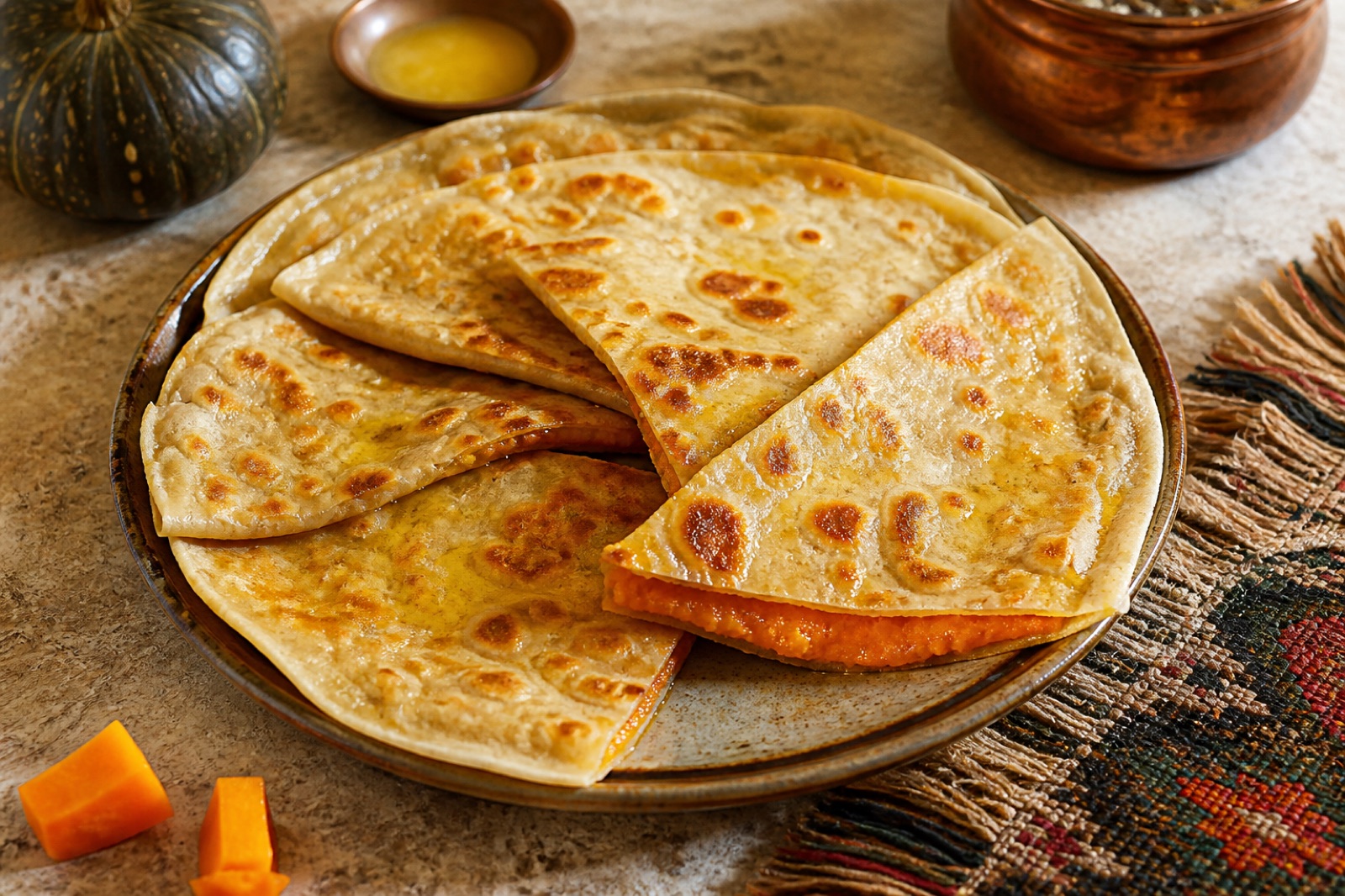
Khingalsh: another side of pumpkin
Pumpkin is the defining filling of khingalsh. Beside cheese-filled chepalgash, it shows how different two related breads can taste. Pumpkin's own sweetness contrasts with the salty, milky character of cheese, making the pair interesting at a tea table. When ordering, ask about the actual filling as well as the name. For a home version, pay attention to the moisture in the pumpkin: a wet filling inside thin dough is harder to close and transfer to the pan.
Shared trays and individual portions
A table is shaped not only by recipes but by how food is shared. The heritage catalogue's account of dining describes cut pieces of bread on a shared tray as well as more recent individual plates. That small change shows why tradition need not mean one fixed table setting. A different presentation in another household is unsurprising. As a guest, follow the host's serving sequence and ask a simple question if it is unclear how to help yourself from a shared dish.
Making conversation part of the meal
The best questions at a table are often simple: how is this made at home, who in the family cooks it, and which filling is the favourite? Such conversation lets a household tell its own story without asking one person to represent an entire culture. If you do not want more food, say so with thanks; mention an allergy before the meal. Keep photographs secondary to conversation. A dish remembered by name, and the person who explained it, may stay with you longer than another plate photograph.