From 1931 to the present
The theatre emerged in the early 1930s as a cultural centre bringing together young actors, writers, musicians and poets. By staging local drama alongside Russian and international repertory, it developed its own acting and directing traditions. Its history is a memory carried across generations, not merely a building.
Text, oral culture and humour
Proverb, narrative rhythm, family relations and social humour are powerful materials on the Chechen stage. Even without every local reference, an audience can read emotion through distance, silence, repetition and music. Use surtitles where offered; otherwise read a synopsis before the performance.
What to watch in a performance
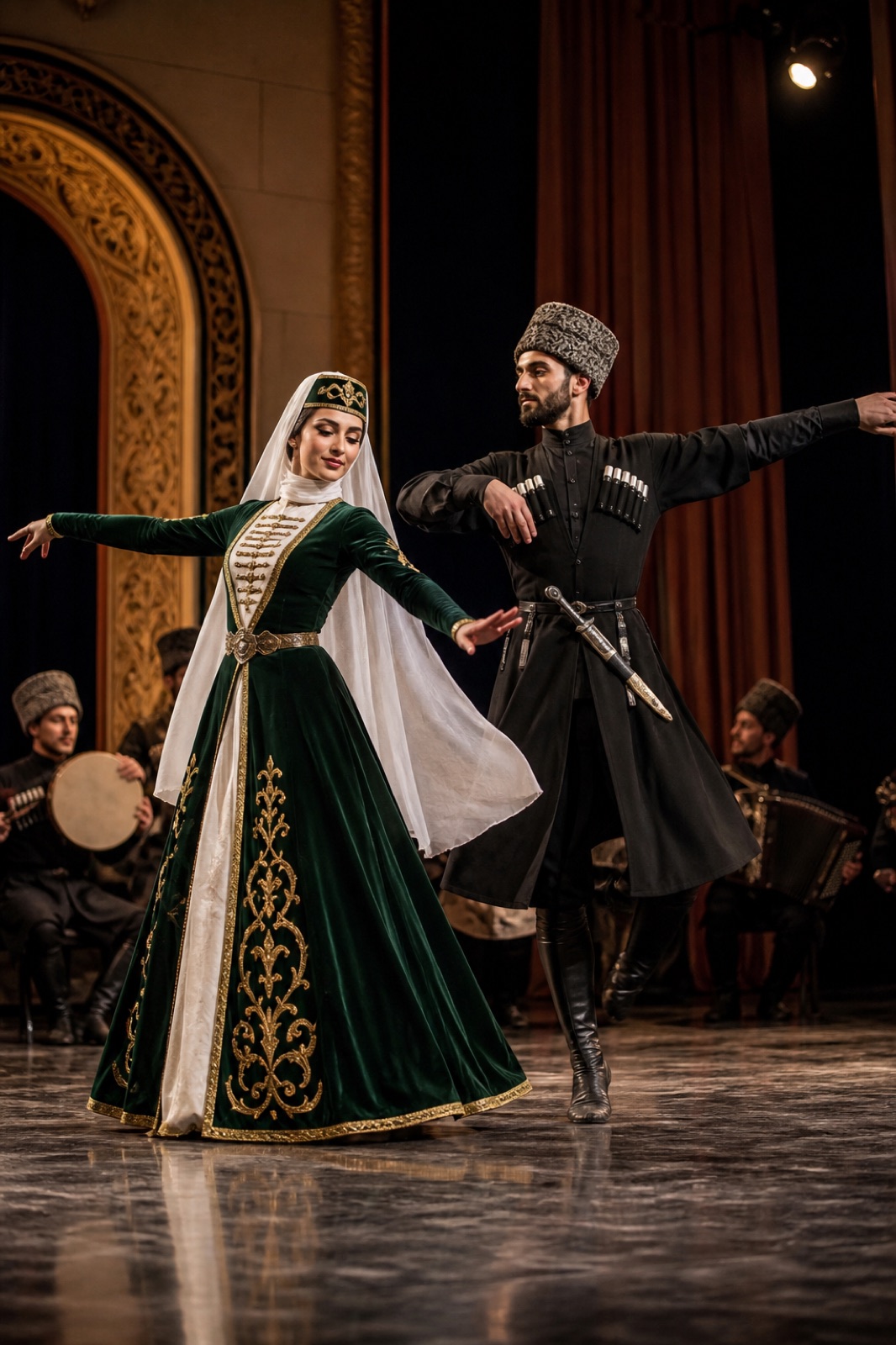
Notice how scenery defines space, how costume identifies character and how music carries transitions. Do not measure acting by volume or gesture alone: gaze, posture, tempo and listening build the scene. The rhythm of applause also reveals the audience's relationship with the work.
A theatre evening in Grozny
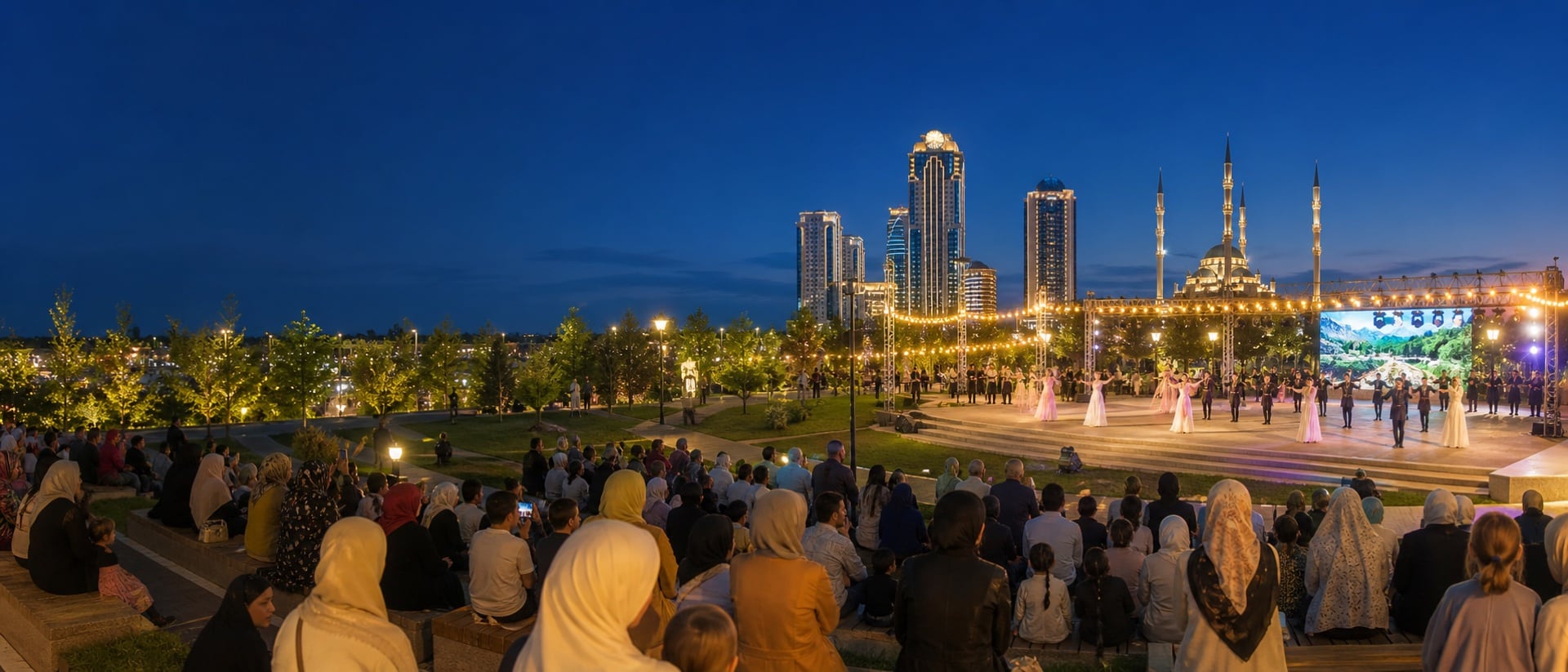
Check the programme directly with the theatre or its Culture.ru institution page. Venue, start time, language, age rating, interval, ticketing and photography vary by production. Arrive early, silence phones and do not record unless permission is explicit.