Small gestures as a guest
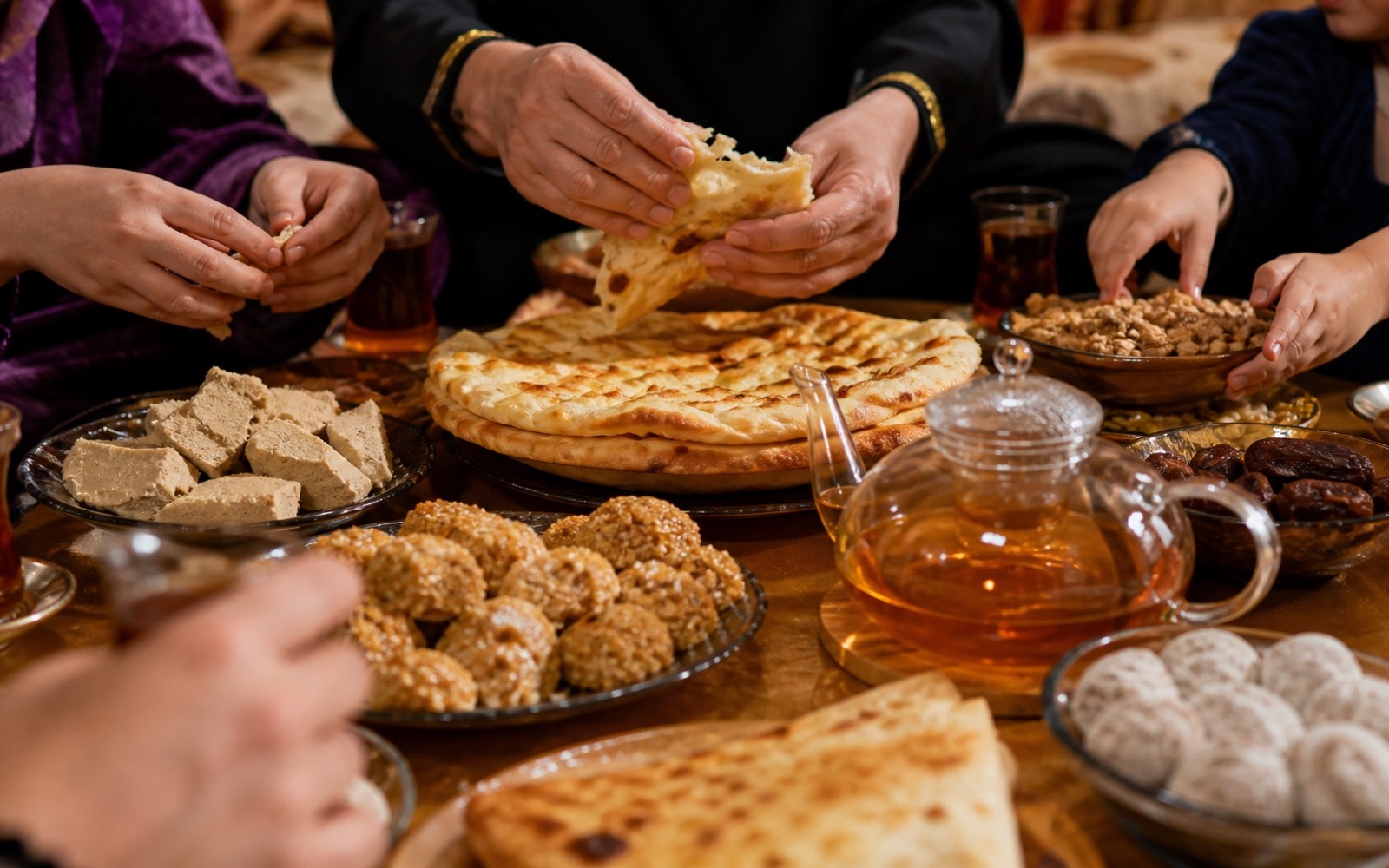
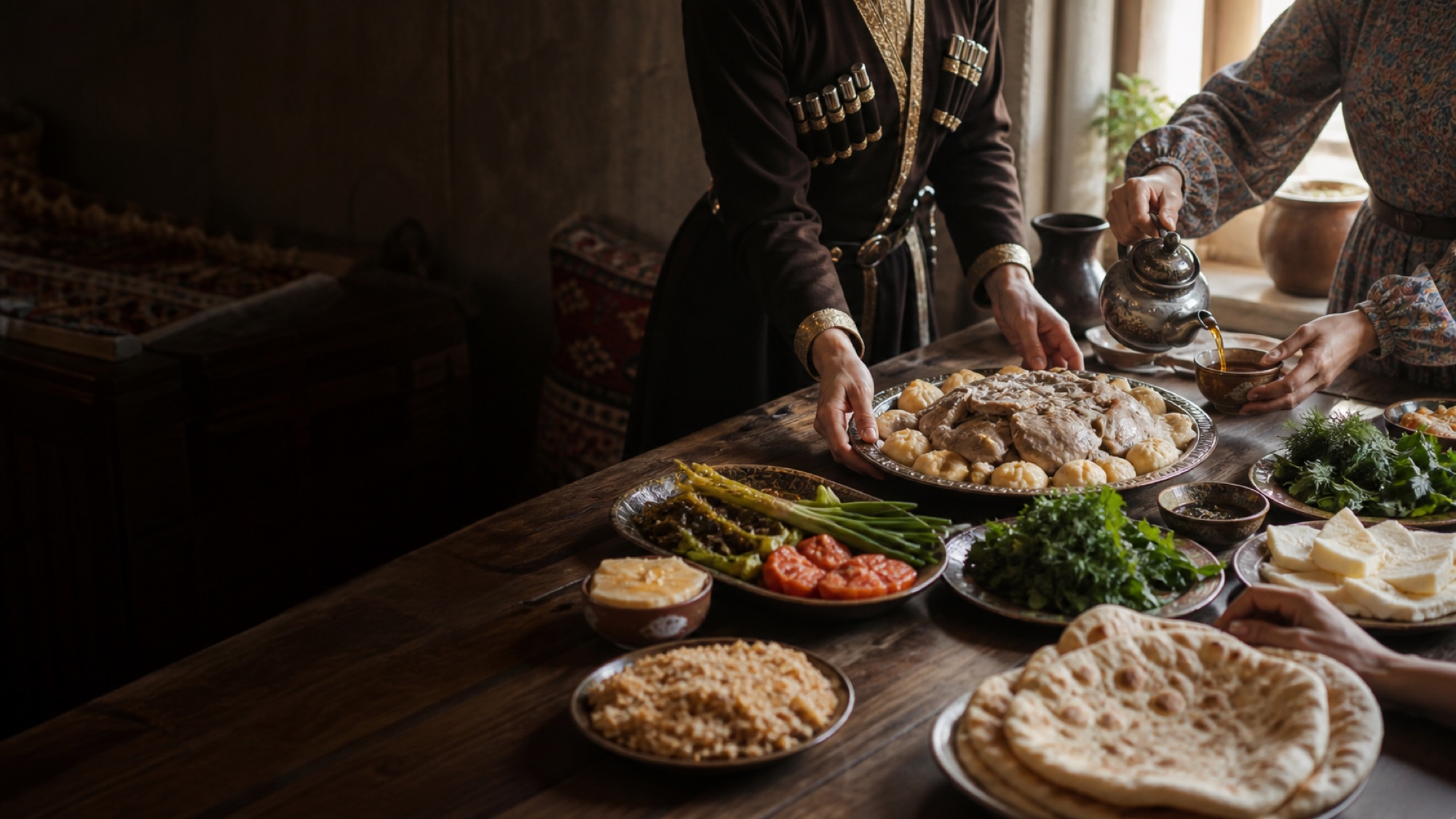
Wait for guidance when entering, receive hospitality without rushing, listen to elders and ask before photographs. Learn the table arrangement from the host and never generalise one family's practice to everyone.
How to discuss the idea
Turning Nokhchalla into an exotic, fixed rulebook flattens lived experience. Read scholarship, oral history and contemporary personal accounts together, including women, young people and diaspora voices.
A warm note for visitors
Do not try to memorise every gesture; be attentive, calm and curious. Asking when unsure is often the most respectful choice. A sincere thank-you and following the host's pace matter more than perfect protocol.
Hospitality includes boundaries as well as generosity
Reading hospitality as an unlimited duty of the host turns Nokhchalla upside down. A guest also attends to timing, the household’s routine, topics the family does not wish to discuss and boundaries around photography. If you need to decline food, briefly and politely explain a health need, allergy or personal preference, then thank the host without turning persistence into an argument. A table, children or family objects seen in a private home are not automatically shareable content. Generosity does not grant permission to ignore privacy; equally, a guest may state a calm boundary when something feels uncomfortable. It is more accurate to present Nokhchalla as an ethical horizon that gives both sides responsibilities than as a rigid code erasing individual choice.