HERITAGE
How to read the Vainakh stone towers
Stone, slope, opening and path: the landscape deepens when mountain architecture begins to speak.
CECENISTAN.COM travel editors · 4 minute readA tower cannot be understood only through age or height. Its position on the slope, surrounding homes and relationship with water matter as much as the masonry. This story gathers a few keys for looking at heritage with greater attention and care.
Begin with the setting
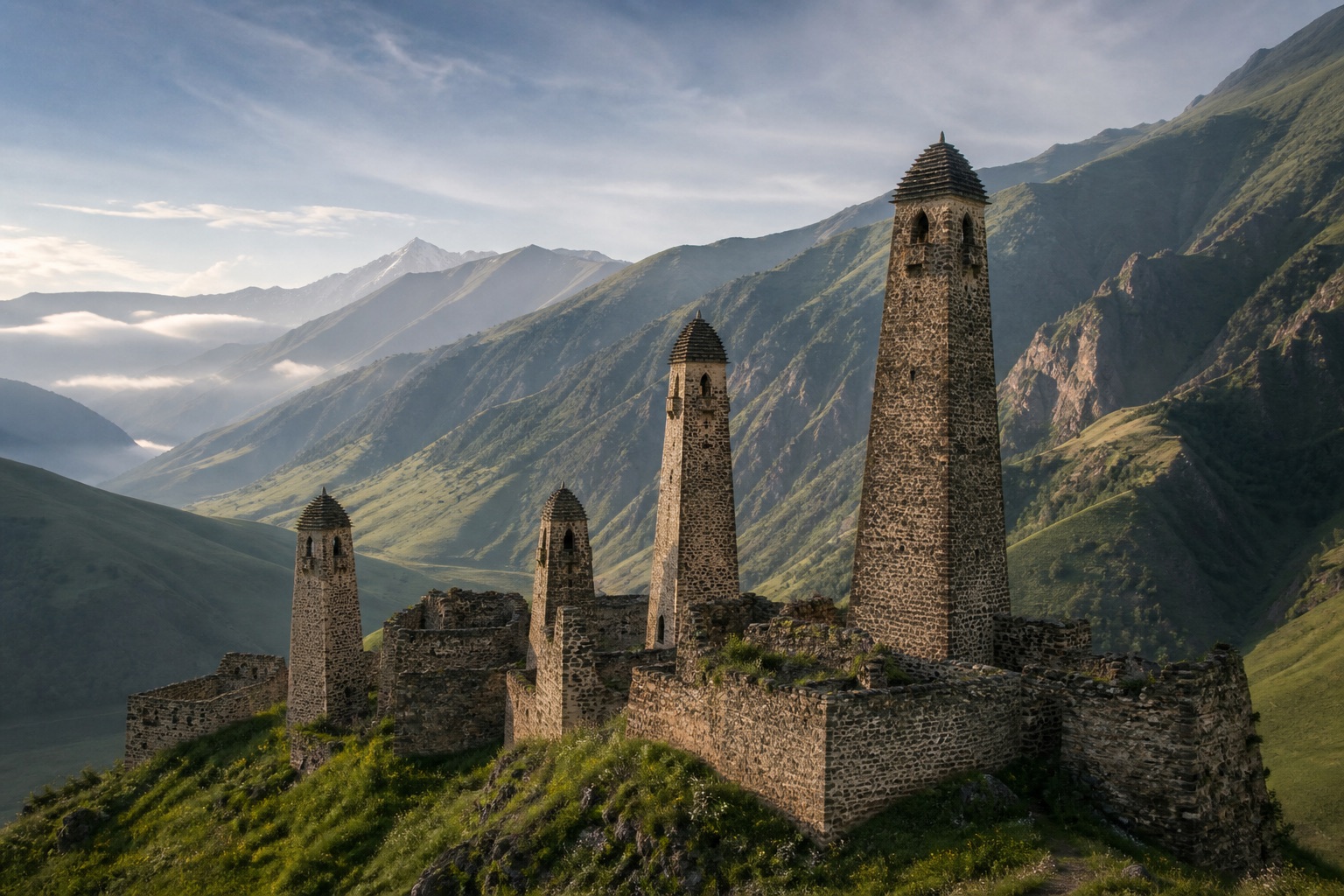
Before approaching a tower, notice the direction of the valley, the sun, access to water and nearby paths. Location often speaks as loudly as form. Highland architecture is not decoration placed on a landscape; it is a response in which climate, defence, everyday life and kinship meet on the same ground.
The craft of stone
Look at the balance between large and small stones, the scale of openings and the line of corners. Rather than seeking perfect symmetry, read repairs and weathering accumulated over time. Avoid touching loose material, leaning on walls or leaving the marked path: these are matters of safety and respect alike.
A tower never stands alone
A solitary tower may dominate a photograph, but settlement history includes homes, agricultural terraces, cemeteries and passes. Widen the frame. If a local storyteller is present, listen before asking for a photograph. A family memory will often reveal more than a few lines on a sign.
Leave a light trace
Climbing masonry, launching a drone without permission or taking a fragment as a souvenir quietly erodes heritage. The best visit leaves little beyond footsteps and a thoughtful question. When sharing photographs, describe the place without exaggerated adventure language and acknowledge its fragility.
05 · PHOTO ESSAY
Visual notebook
Updated
Sources and further reading
Museum of the Chechen Republic — exposition↗Kavkaz.travel — regional routes↗06 · Magazine