TABLE
An evening at a Chechen table
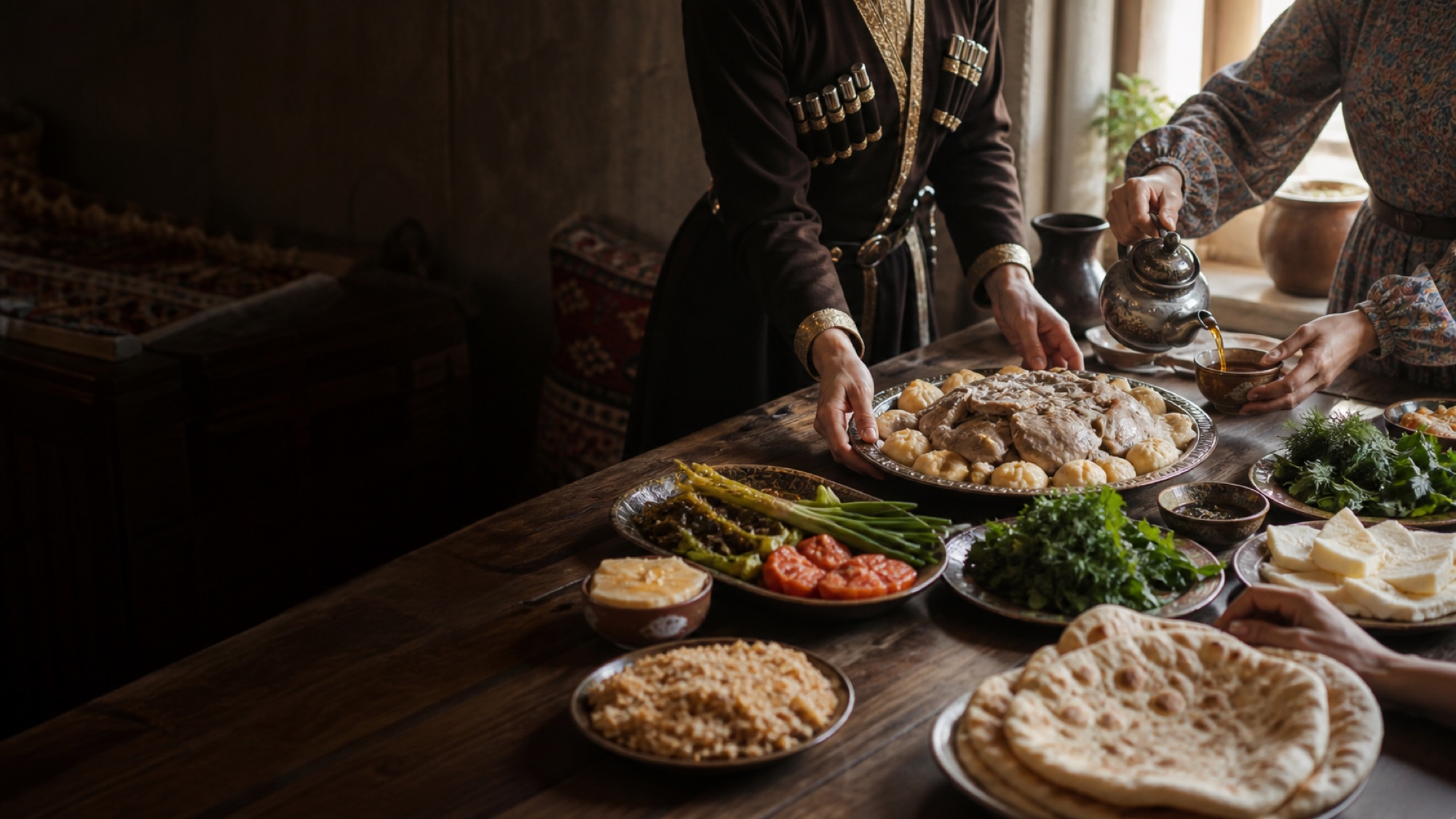
Galnash, flatbread, tea and lingering conversation: the table is shaped as much by staying together as by food.
CECENISTAN.COM travel editors · 4 minute readNo single plate can explain Chechen cooking. The clarity of meat and dough, herb- or pumpkin-filled breads, hot tea and the order of serving all belong to the same story. This piece looks beyond the recipe book and towards the atmosphere of the table.
Simplicity is not absence
Zhizhig-galnash begins with only a few core ingredients. Its finesse lies in the dough's texture, the clarity of the broth and the balance of garlic sauce. Keeping each element distinct lets everyone compose a mouthful at the table. The dish is understood through warmth and sequence rather than layers of heavy sauce.
The season in a flatbread
The softness of cheese-filled chepalgash and the gentle sweetness of pumpkin khingalsh open different seasons within the same family of dough. Herb-filled kholtmash brings a short spring window to the table. Do not search for one final version: family measures, thickness and pan colour can vary from kitchen to kitchen.
The rhythm of serving
Making room for a guest, moving a plate within reach and refreshing tea matter as much as a recipe. If you need to decline something, be brief and gracious; a small taste is often a good beginning. Ask before photographing. A long shoot that leaves food cold can make the host's work disappear behind the image.
After the tea
A table often ends not when plates disappear but when conversation slows. When sweets or nuts arrive, stay a few minutes longer. What fixes a meal in memory may not be the exact garlic ratio, but the family story told alongside it. Take the recipe home, while knowing the warmth of a table cannot be copied through ingredients alone.
05 · PHOTO ESSAY
Visual notebook
Updated
Sources and further reading
Chechen Republic intangible cultural heritage — Chepalgash↗CECENISTAN.COM — Chechen cuisine guide→06 · Magazine